MemoryFlow Review 2026: Can a 12-Minute Sound Track Sharpen Your Memory?
Disclosure: this page contains affiliate links. If you buy through them we may earn a commission at no extra cost to you. It doesn't change our assessment. This content is general information, not medical advice.
MemoryFlow is a digital audio program, not a supplement. For a one-time $69 you get a 12-minute sound track to play once a day, which the sales page says strengthens your brain's gamma waves and helps it clear the waste that blocks memories. The idea comes from real research on 40 Hz light and sound stimulation, so we looked at what that research shows, including a large trial reported in November 2026, and at what you actually get.
MemoryFlow at a glance
- What it is
- Digital audio program (12-minute daily track) plus two bonus guides
- Format
- Instant online access on a phone, tablet or computer
- Claimed method
- Sound patterns meant to encourage 40 Hz gamma brain waves
- Price
- $69 one-time payment (at time of writing)
- Guarantee
- 90 days
- Where to buy
- Official website only, order processed by ClickBank
- Best for
- Adults with normal age-related forgetfulness who want a low-risk experiment
- Avoid if
- Epilepsy or a history of seizures; memory decline that hasn't been checked by a doctor
Our verdict in 30 seconds
MemoryFlow is built on a genuine line of research. In 2019, MIT scientists reported that an hour a day of 40 Hz tones for a week reduced amyloid and improved memory in mice. Moving to people has been harder: in November 2026 the largest trial so far, Cognito's HOPE study of a light-and-sound headset in people with Alzheimer's disease, missed its primary endpoint, with better results only in a mild-disease subgroup that still has to be confirmed.
MemoryFlow is a different thing again: a 12-minute track played through ordinary speakers or headphones, with no published study, no evidence that it changes brain waves, and no information about what the sound contains. On the plus side, it costs less than most supplement packages, it's very unlikely to cause harm at a comfortable volume, and the 90-day guarantee is generous. Treat it as an experiment, not a treatment, and see a doctor if memory problems are new or getting worse.
What is MemoryFlow?
After paying, you get online access to the MemoryFlow audio, described as a “professionally engineered 12-minute audio program” you listen to once a day while sitting or lying down, with no special equipment. The order includes two digital bonus guides: Total Brain Reboot (sleep, nutrients and a homemade drink for recall) and Memory Made Easy (memory techniques).
The page calls it a lifetime membership with instant access. Oddly for a digital product, it also shows a shipping table, and its refund policy talks about returning bottles and packing slips, which suggests a template shared with the seller's supplement sites.
How MemoryFlow claims to work
The sales page says gamma waves “power your brain's natural cleaning system”, which weakens with age, and that MemoryFlow gently restores it with sound patterns that work subconsciously while you listen. It promises small improvements within the first few weeks and lasting ones after 60 to 90 days of daily use, and calls it completely safe because nothing is swallowed.
Our take: the link between 40 Hz stimulation and the brain's waste clearance comes from studies in mice. In people, researchers have used dedicated devices that combine flickering light with sound pulsed at exactly 40 Hz, typically for an hour a day, mostly in people with Alzheimer's disease. A 12-minute recording isn't the same dose or method, and MemoryFlow hasn't published its frequency, volume or any testing. Its reference list also includes sources unrelated to sound or memory, such as a paper on antifungal immunity.
What you get with MemoryFlow, and what the research says
MemoryFlow has no ingredients. Here's what the order includes and how each part lines up with the evidence.
| Part | Details | What the research says |
|---|---|---|
| 12-minute daily audio track | Sound patterns said to target 40 Hz gamma waves | In mice, an hour a day of 40 Hz tones reduced amyloid and improved memory (2019). In people with Alzheimer's, a 40 Hz light-and-sound headset missed its main goal in the 2026 HOPE trial. MemoryFlow's own track hasn't been studied. |
| Bonus 1: Total Brain Reboot | Guide on sleep, nutrients and a memory drink | Good sleep and enough vitamin B12 genuinely matter for memory; the homemade drink claim is unverified. |
| Bonus 2: Memory Made Easy | Memory techniques, including a "jingle" method | Memory techniques can genuinely help you recall specific information with practice. |
| Lifetime access | Online member area, any device | Keep your login and ClickBank receipt; digital products depend on the seller's website staying online. |
The honest catch
1. The biggest human trial so far missed its main goal
Cognito's HOPE trial used a purpose-built headset delivering synchronised 40 Hz light and sound every day for 12 months. It didn't meet its primary endpoint; a prespecified group with mild Alzheimer's did better, but those results haven't been peer-reviewed yet. If a dedicated medical device is still unproven, a 12-minute audio track has a lot more to prove.
2. No evidence MemoryFlow changes your brain waves
Researchers use EEG to confirm that stimulation actually drives 40 Hz activity. MemoryFlow publishes no such testing, and the page doesn't say what frequency the track uses.
3. “Completely safe” needs one caveat
Rhythmic stimulation is generally well tolerated, but in HOPE, seizures were reported in 0.9% of people using the device compared with 0.3% on the sham device. That device also used flickering light; even so, if you have epilepsy, ask your doctor before trying it. Keep the volume comfortable to protect your hearing.
4. Memory changes deserve a check-up
Forgetting a name now and then is a normal part of ageing. Many causes of memory problems can be treated, including medication side effects, low vitamin B12, thyroid problems, sleep problems and depression, so new or worsening forgetfulness is worth discussing with a doctor.
Does MemoryFlow work?
There's no direct evidence that MemoryFlow improves memory. Some people may feel sharper simply from 12 calm minutes a day, which isn't nothing, but it isn't the effect the page promises. Habits with better evidence for protecting memory as you age include regular physical activity, good sleep, managing blood pressure, treating hearing loss, staying socially active and learning new skills.
Side effects, safety and who should skip it
Possible side effects: No physical side effects are expected at a comfortable volume. Some people may find rhythmic tones tiring or irritating; stop if you get headaches, dizziness or ringing in the ears. People with epilepsy should ask their doctor before trying rhythmic sensory stimulation.
MemoryFlow may suit you if…
- You have normal, age-related forgetfulness and want a low-cost experiment
- You enjoy guided listening or relaxation routines
- You'll use the 90-day guarantee if it doesn't help
Skip it or ask your doctor first if…
- Your memory problems are new, getting worse or worrying your family
- You have epilepsy or have had seizures (ask your doctor first)
- You've been diagnosed with Alzheimer's or another dementia and want a treatment
- You expect results like those of prescription medicines
MemoryFlow isn't a medical device and isn't cleared by the FDA to diagnose, treat or prevent memory loss or dementia. If you or your family have noticed changes in your memory or thinking, talk to a doctor before relying on any app or program.
How to use MemoryFlow
The page says to listen to the 12-minute track once a day, sitting or lying down; no concentration is needed and any phone, tablet or computer works. Use comfortable headphones at a moderate volume, pick the same time each day, and note any changes over 60 days so you can decide well before the 90-day guarantee ends.
Price, packages and guarantee
Prices below were taken from the official order page on November 27, 2026. Vendors change prices and offers often, so check the current price before you buy.
MemoryFlow program
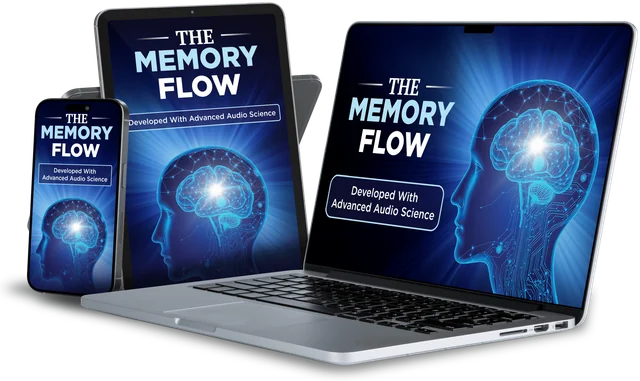
MemoryFlow is a one-time payment of $69 with no subscription, according to the sales page, and is delivered digitally. The charge appears as ClickBank on your statement.
The money-back guarantee
MemoryFlow comes with a 90-day money-back guarantee. As it's a digital product, there's nothing to send back: you request the refund from the vendor or ClickBank within 90 days of buying.
How to ask for a refund
- Find your order number in the ClickBank confirmation email (orders show as CLKBANK* on your statement).
- Request a refund through ClickBank's order support at clkbank.com, or email the vendor's support, before the 90 days are up.
- Keep a copy of your request and the reply until the refund appears on your statement.
Where to buy MemoryFlow
MemoryFlow is sold through its official website, and the order is processed by ClickBank, which handles payment, receipts and refunds. Buying there is the way to be covered by the 90-day guarantee. Copies offered elsewhere aren't covered and may not be genuine.
Check MemoryFlow price on the official site →
Pros and cons
Pros
- One-time $69 price, no subscription
- Only 12 minutes a day
- No pills, so no drug interactions
- Based on a real, if early, area of research
- Generous 90-day money-back guarantee
Cons
- No published study of MemoryFlow itself
- Frequency and sound design aren't disclosed
- 40 Hz research is mostly in mice; the big 2026 human trial missed its main goal
- Reference list includes unrelated sources
- Refund policy is copied from a supplement template
- Not a treatment for dementia
Related reviews
Comparing options? These reviews cover similar products:
Frequently asked questions
Is MemoryFlow a supplement?
No. It's a digital audio program: a 12-minute track you listen to once a day, plus two bonus guides.
Does 40 Hz sound improve memory?
In mice, an hour a day of 40 Hz tones reduced amyloid and improved memory. In people the evidence is still early: a large 2026 trial of a 40 Hz light-and-sound device in Alzheimer's missed its main goal. MemoryFlow itself hasn't been studied.
How do I use MemoryFlow?
Listen to the 12-minute track once a day on a phone, tablet or computer, at a comfortable volume.
Is MemoryFlow safe?
For most people it should be harmless at a sensible volume. If you have epilepsy, ask your doctor before trying rhythmic light or sound stimulation.
Can MemoryFlow help Alzheimer's disease?
It isn't approved or tested for Alzheimer's. People with a diagnosis should talk to their doctor about proven treatments and clinical trials.
How much does MemoryFlow cost?
A one-time $69, with a 90-day money-back guarantee.
Where can I buy MemoryFlow?
From the official website, where ClickBank processes the order and the guarantee applies.
Final verdict
MemoryFlow borrows a promising idea from neuroscience, but the program itself has no evidence behind it, and the research it leans on is still unsettled even for purpose-built medical devices. At $69 with a 90-day guarantee, it's a low-risk experiment if you're curious and your memory concerns are mild. It isn't a treatment, and new or worsening memory problems should be checked by a doctor first.
Our rating: 3.2/5
Check MemoryFlow price on the official site →Sources
We based this review on the official MemoryFlow sales and refund pages and the reference list shown there (checked November 27, 2026). MemoryFlow is a digital program, so there's no supplement label. We also used these independent sources:
- MIT News: Brain wave stimulation may improve Alzheimer's symptoms (2019)
- NeurologyLive: Spectris misses primary end point in pivotal HOPE trial (November 2026)
- OVERTURE feasibility trial of 40 Hz sensory stimulation (PMC)
- National Institute on Aging: Memory problems, forgetfulness and aging
Medical disclaimer: This review is for general information only and is not medical advice. MemoryFlow is not a medical device and is not intended to diagnose, treat, cure or prevent any disease, including dementia. Talk to a qualified health professional about changes in memory or thinking, especially if they are new or getting worse. Individual results vary.